
Zero Friction Knowledge Management for Radicals

Capture information in an unstructured format. Render it later with any structure you like. No more folders or tags.

Features

Knowledge Management Reimagined

Kelai rethinks how information is captured, organized, and retrieved.

Broad Device Support

All major platforms are supported including iOS, Android, and Web

Blazingly Fast

Offers a smooth, fast user experinece

Portable

Your notes are stored safely in the cloud and synced across all of your desktop and mobile devices

Secure

Industry standard encryption and authentication ensures your notes are safe and secure

Login with Google

No new username and password to remember - login with your Google account

Freeing

Offers a unique approach to knowledge management that can be simultaneously simpler and more powerful

Capture

Frictionless Writing

Capture information in a simple, unstructured format. Meeting notes, course notes, exercise results, project ideas, frequent flyer numbers, etc. No worrying about whether you 'put it in the right place'. No constant revision of the way your notes are tagged or organized. No upkeep.
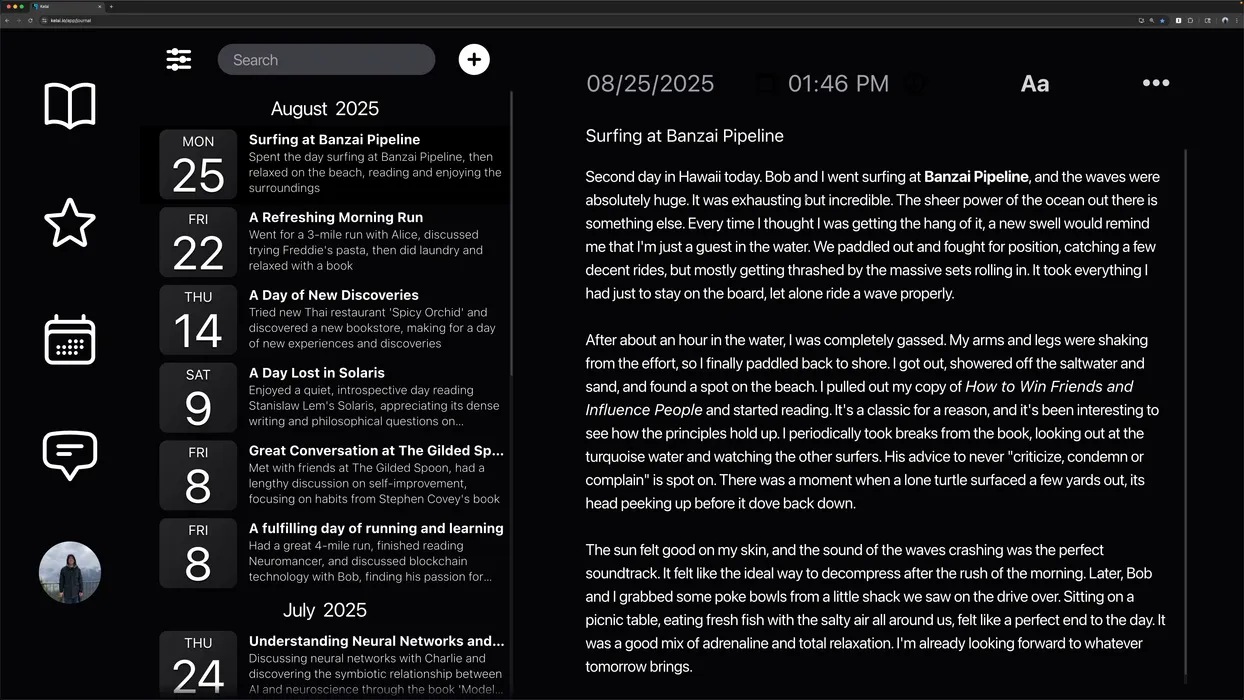
Frictionless Writing

Structure & Organization

Narratives

Build structure using 'Narratives', targeting categories of information to group together. Organize and render information in a way that is completely decoupled from the way it is captured. Create, update and delete narratives without modifying your original notes. Narrative content is automatically recomputed to stay in sync with your notes.
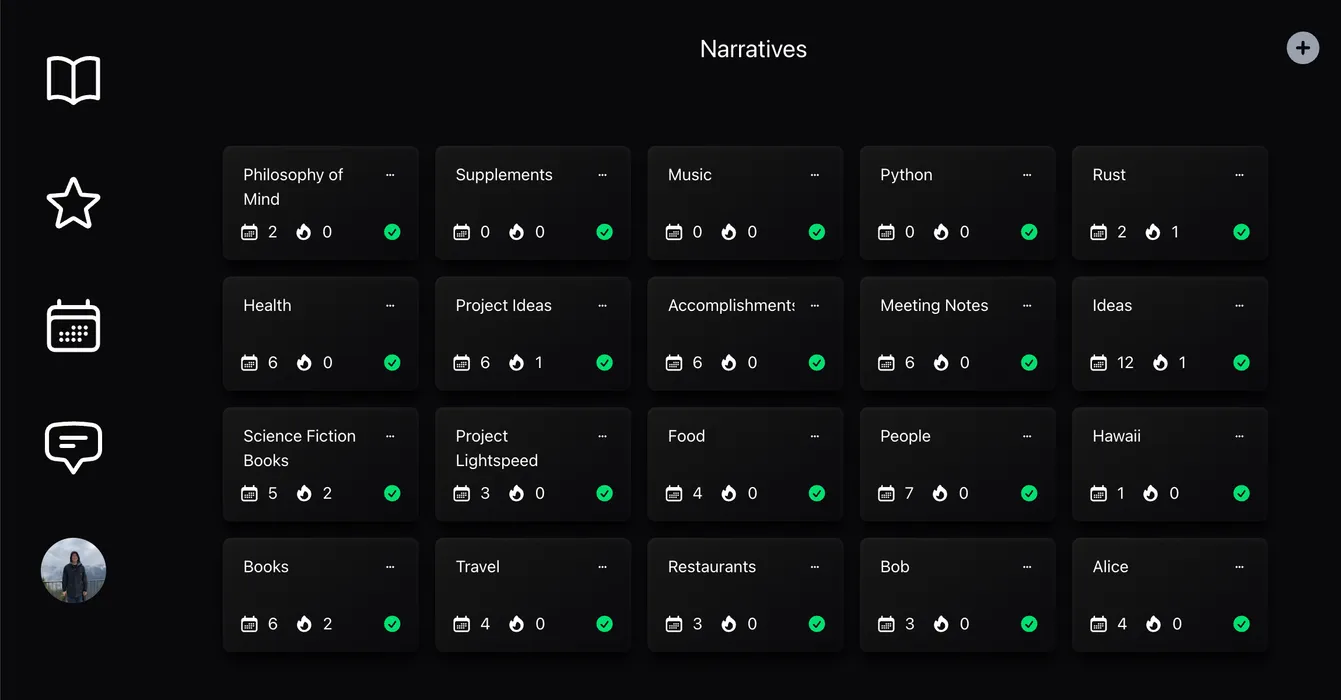
Narratives

Conversation

Chat

Have a freeform conversation with your notes using a familiar interface. Ask questions about everything you've ever written. Identify previously unseen patterns and correlations.
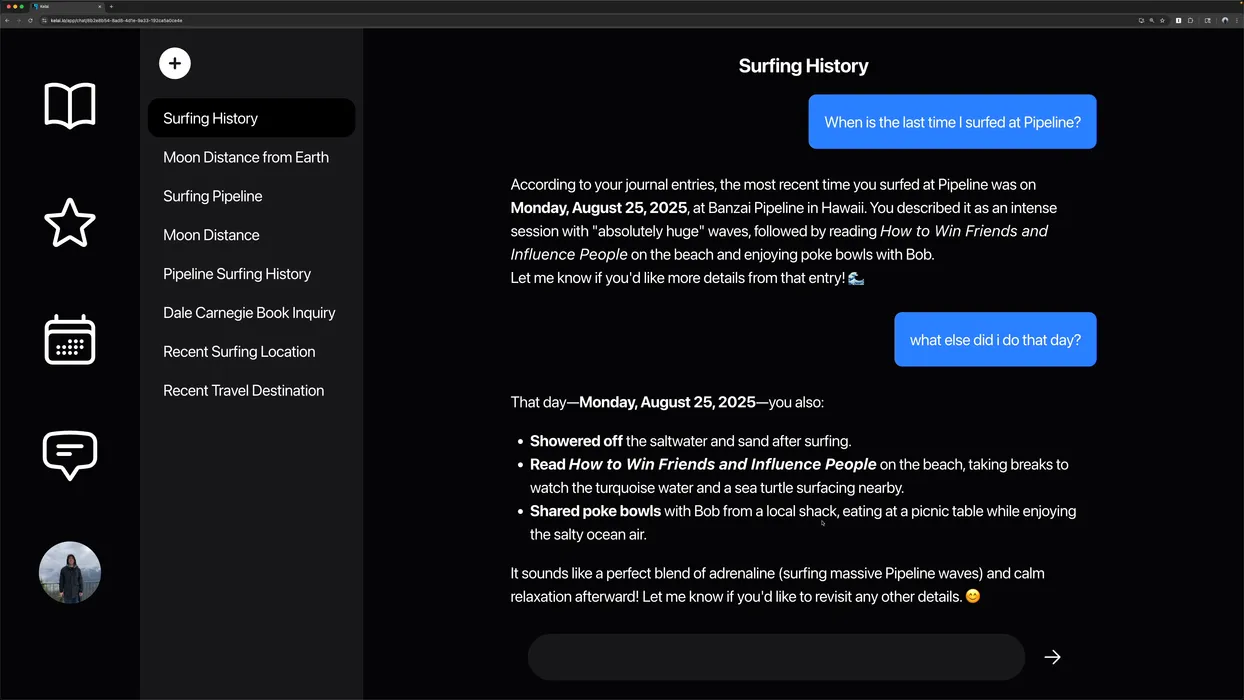
Chat

Frequently Asked Questions

Find answers to common questions about Kelai

These are all fantastic apps. Kelai is unique in its minimalist approach to capturing information that is completely decoupled from the way information is organized. No need to think about where new information fits in an organizational system. No need to decide whether your organizational system needs to be updated to accommodate the new information. Kelai takes a novel approach to structuring and organizing captured information - one that breaks rank with traditional knowledge management apps.
Kelai allows you to capture notes and information in a journal-like format, but its powerful organization and retrieval features imbue it with the capabilities of a full-fledged knowledge management app. The Journal-like capture paradigm provides many benefits over traditional note capture. It frees you from having to think about how to organize the information being captured. It serves as a "temporal breadcrumb trail", making the sequence of events, thoughts, and recorded information clear. This sequence data can be leveraged by Kelai's retrieval, structuring and aggregation features for additional context and insights. It negates the need to revisit previously recorded information if something changes. Just record the update in your latest entry.
Information is captured in 'entries', which are like text documents that have a date and time associated with them. You are encouraged to record completely different types of information in a single entry - business meeting notes, personal goal tracking, frequent flyer numbers, etc. Despite this, structuring and organizing your information is still possible. Existing narratives will be automatically updated with any new information relevant to that narrative.
Narratives allow you to structure and organize your information, despite it being captured in an unstructured way. A narrative consists of a title (for display purposes) and a prompt that describes, in natural language, the type of information that should be captured by that narrative. For example, you might have a narrative "Frequent Flyer Numbers" with the prompt "Frequent Flyer numbers I've recorded. Include the number and the airline". The narrative would then maintain a current snapshot of every frequent flyer number recorded in your entries. Narratives are automatically updated as new information is captured. Another example narrative might be "Project A" with prompt "Meetings, thoughts, notes and events related to my project A at work". Similarly, any information recorded about project A will be surfaced by the narrative. You might also decide to create another, broader narrative "Projects at Work" to capture all information related to any project at work. Narratives allow you to render your information with structure and organization - structure and organization that can be revised without modifying the original information.
Tags and folders are the traditional way of organizing information in knowledge management apps. They give you fine grained control over how things are organized, but they have several shortcomings. First, they require you to make predictions about the types of information you will be capturing and how you will want to view them later. If you get it wrong or your requirements change, you may have to spend time manually "migrating" to a new system. Second, they are tightly coupled with the original information, forcing you to manually modify the source information to make changes. Third, they are not automatically applied as you record new information. If you neglect to tag something properly, it can be effectively lost forever.

Kelai

Zero friction knowledge management

Copyright 2025 Kelai. All Rights Reserved